Security · Greater Manchester
Access control with the fire interface done right
Readers, maglocks and controllers to BS EN 60839, designed, installed and maintained by a contractor who also services fire alarms, so the BS 7273-4 door release is engineered, not bodged.
The service
An electrically locked door is a life-safety device
The moment you put a maglock on an escape route, fire safety law and BS 7273-4 apply: the door must release when the alarm operates, on power failure, and from a manual point, and that behaviour must be tested and recorded. It is the most common serious defect we find on systems installed by security-only firms, because they do not maintain the fire alarm on the other side of the interface.
We do. The interface is designed as one circuit, commissioned as one system, and re-tested at every fire alarm service visit, with the result in the same certificate pack.
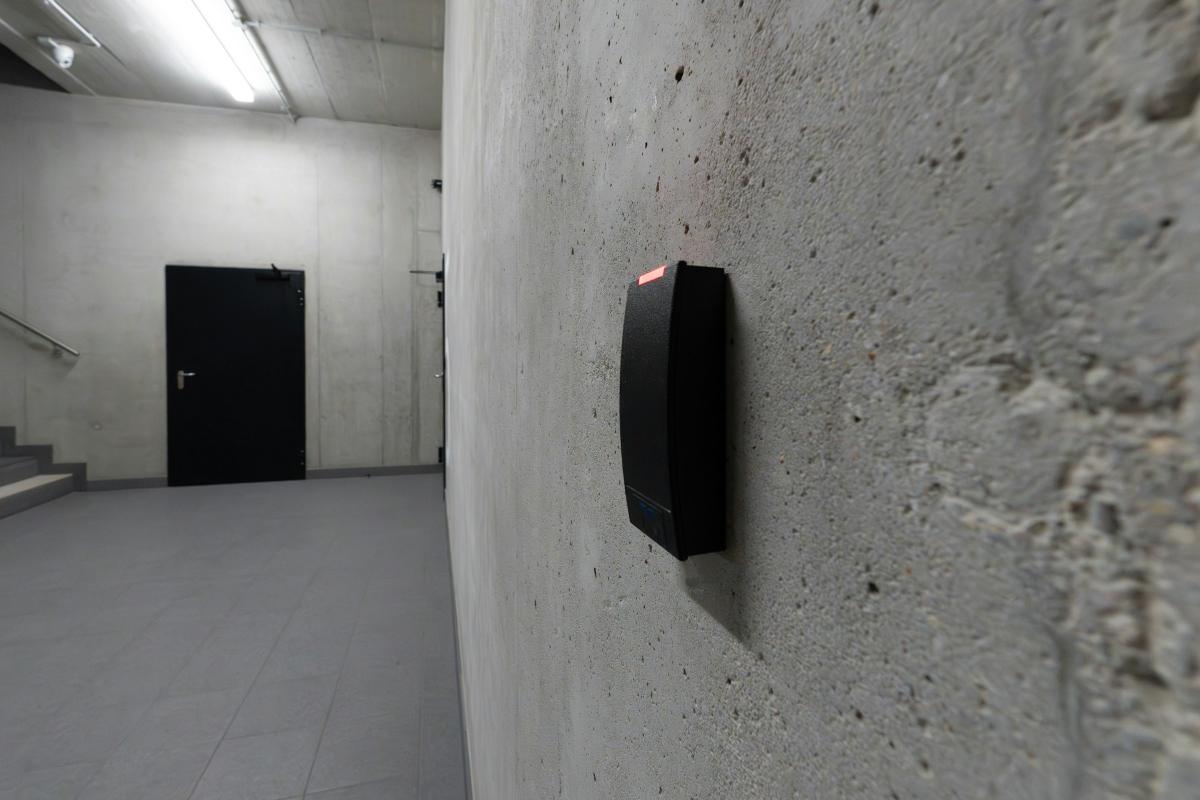
Day to day, you get what access control is for: doors that log who went where, credentials cancelled in seconds when staff leave, and no more master-key anxiety when one goes missing.
From enquiry to certificate
No sales visit and no three-week wait to find out what it costs. Tell us your deadline and the dates are planned back from it.
Form or phone. We ask for the postcode, the premises type and any deadline you are working to.
An engineer walks the building, counts the devices, checks the panel and the logbook, and notes what is missing.
A written figure for the contract, plus a separate price for anything that needs putting right first.
Certificate, logbook entries and priced defects, emailed to you within 48 hours.
Common questions
Does our access control have to release on the fire alarm?
If it locks a door on an escape route, yes, BS 7273-4 sets out how the release must be wired, monitored and tested.
The right category of interface depends on the building and the risk assessment. We specify it in writing, install it, and prove it at every fire alarm service.
Can you add fire release to an existing system?
Usually yes. We survey the existing controllers and locking, then wire and certificate the interface to BS 7273-4.
Where the existing kit cannot support a compliant interface we say so and price the options, rather than leaving a defect in place.
What happens when someone loses a fob or leaves?
The credential is cancelled in seconds from the register, no locksmith, no lock changes.
We set up a simple joiner/leaver process at handover, and under a maintenance contract we audit the register at each visit so dormant credentials do not accumulate.
Better bundled: access control costs less and works harder inside a combined fire & security contract with one renewal and one certificate pack.
Get a contract priceAccess control questions
Still unsure? Call 07703 295654 and ask an engineer directly.
Do access control doors have to release when the fire alarm goes off?
Yes, on escape routes. BS 7273-4 sets out how the fire alarm interface must operate, including the fail-safe behaviour and the actuation category. Getting that interface wrong is the single most common serious defect we find on access control systems, and it is the one that endangers people.
What is the difference between fail-safe and fail-secure locks?
Fail-safe locks release when power is removed, so they unlock in a fire or power failure. Fail-secure locks stay locked. Escape routes need fail-safe behaviour on the alarm interface; security-critical doors that are not on an escape route may be fail-secure. The fire strategy decides which goes where, not the lock catalogue.
Can access control be integrated with our fire alarm and CCTV?
Yes, and it is usually worth it. The fire interface is a requirement under BS 7273-4; linking access events to CCTV gives you a searchable record of who opened what and when. We commission and document the interfaces rather than leaving them as a wiring diagram nobody has tested.
What happens when someone loses a fob?
You bar it and issue another. That is the point of access control over keys: no lock changes, no recall of every keyholder, and a record of when the lost credential was last used. We show your team how to do it themselves rather than charging a callout for each one.